Tanner the Cub is a personal, interactive companion designed for children navigating long stays, separation from home, disrupted routines, developmental differences, and unfamiliar environments.
He responds to a child’s environment with stories, encouragement, activities, and playful conversation — without using a camera or microphone.
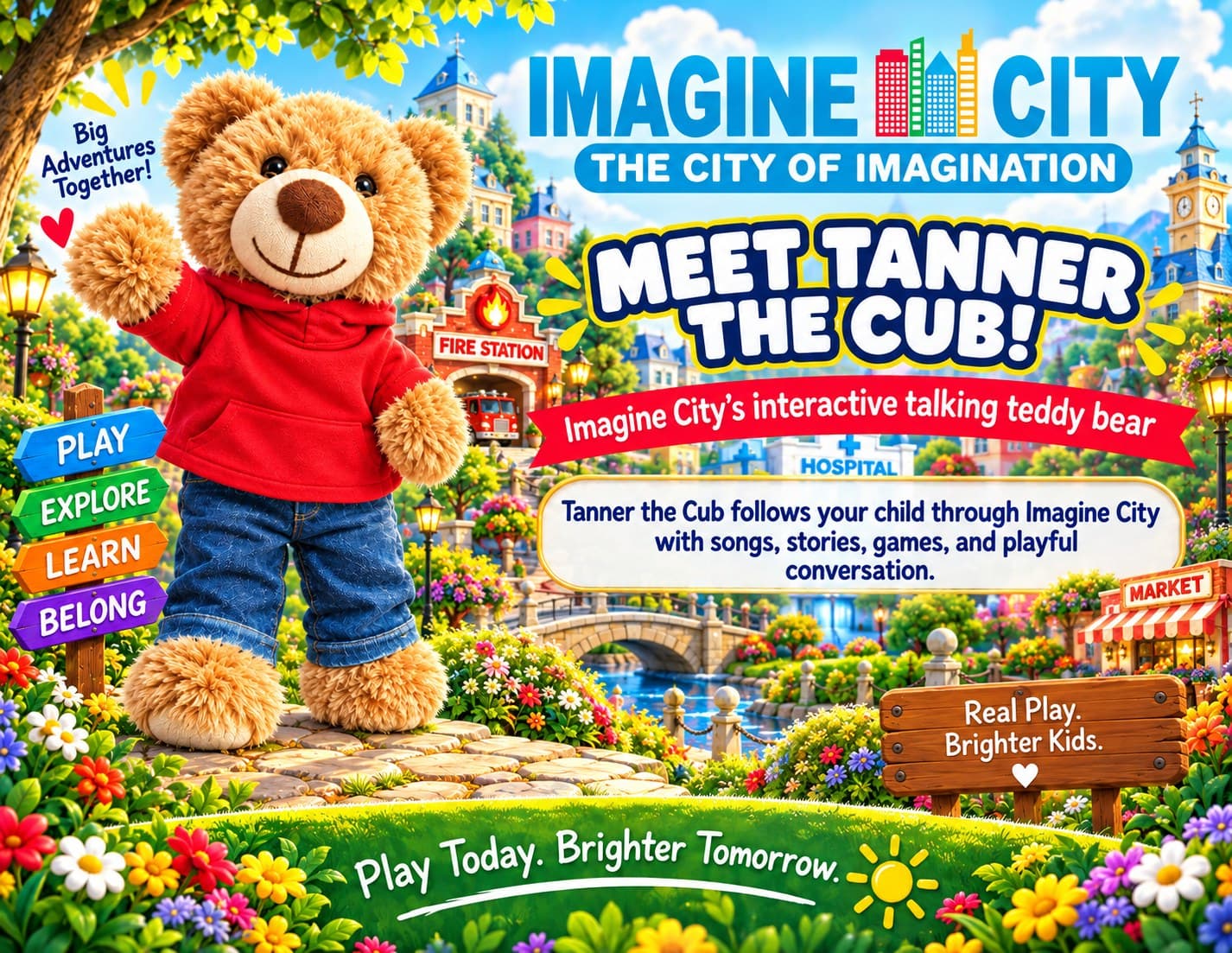
Children often experience the world through play, familiar routines, and trusted relationships. When those routines are interrupted, a consistent companion can make a new environment feel less confusing and more approachable.
Tanner responds with approved stories, jokes, encouragement, activities, and place-specific conversation. He can recognize approved locations, react to movement and touch, respond to special objects and child-controlled buttons, and personalize greetings and activities for each child.
A consistent companion a child can recognize and return to.
Friendly prompts that invite play, conversation, choice-making, and activity.
Approved cues and routines that can help a child understand what is happening next.
Interactive support without watching or listening to the child.
Tanner’s value is not that he replaces a person. It is that he can be present during the many small moments when a child may need a familiar prompt, a playful distraction, a reminder, or an easy way to begin interacting.
The same bear, voice, name, and interaction style can remain consistent across visits or throughout a longer program.
Place-specific greetings and approved explanations can help a child understand where they are and what happens there.
Tanner can invite a child to choose an activity, explore an object, join a game, greet another child, or take the next small step.
Conversation starters, turn-taking prompts, and shared jokes give children a low-pressure reason to interact with peers, caregivers, or staff.
Stories, games, facts, and child-controlled interactions can redirect attention during waiting, transitions, or other stressful moments.
Approved prompts can mark arrivals, activity changes, quiet time, preparation, and departures in a more child-friendly way.
Buttons and approved activity choices let children start interactions rather than only receive instructions from adults.
A child-life specialist, educator, therapist, or program leader helps determine what Tanner says in specific places or situations.
Tanner is designed to create more moments of comfort, choice, participation, and connection — especially when a child is away from home, unsure of what comes next, or hesitant to engage.
Tanner is designed to support child-life and care teams — not replace them. Partners decide what he says, where he can be used, how he is cleaned, and which children or units are appropriate for a pilot.
He is not an autism treatment, and he is not intended to make every child interact in the same way. The strongest programs are built with professionals, families, and neurodivergent children, with sensory preferences and individual communication needs leading the design.
The same core bear can serve every one of these settings, but the content, cleaning rules, staff controls, and success measures are customized for each partner.
Comfort, play, preparation, distraction, bedside engagement, and long-stay continuity.
Predictable prompts, low-pressure interaction, transitions, communication opportunities, and joint activities.
A sense of home, activity continuity, sibling engagement, and support during extended or uncertain stays.
Personal ownership, gentle engagement, predictable routines, and a consistent companion during transitions.
Arrival routines, activity transitions, literacy, facts, cooperative play, and classroom participation.
Group activities, social invitations, scavenger hunts, encouragement, and program navigation.
Tanner can respond differently in a hospital playroom, family room, classroom station, therapy area, or other designated space.
A hug, lift, shake, button press, or other approved physical interaction can start a response.
Tagged books, toys, cards, props, or activity materials can unlock related stories, facts, or prompts.
Tanner can tell stories and jokes, offer encouragement, share fun facts, and guide activities selected for the program.
Tanner can use a child’s name and an approved content profile, while keeping the interaction camera-free and microphone-free.
Buttons and choices let the child start activities or ask Tanner for a type of content.
The same core bear can use different content libraries for pediatric care, developmental programs, education, or family support.
Approved content can grow over time without replacing the entire bear.
Small signals placed in approved areas help Tanner understand where he is. Special tags can help him recognize selected objects. Motion, touch, and child-controlled buttons help him know when to respond. He does not need a camera or microphone to create a personalized experience.
| Child experience | Tanner response | Potential benefit |
|---|---|---|
| Long or repeated stays | Consistent greeting, familiar voice, daily activities, milestone encouragement | May support familiarity, engagement, and a sense of continuity |
| Separation from home | Personal bear, family stories, familiar routines, portable activities | May provide comfort and a recognizable point of connection |
| Unfamiliar environments | Place-specific greeting and approved explanation | May make a new space feel more understandable and approachable |
| Waiting and boredom | Jokes, stories, facts, games, scavenger hunts | Creates constructive activity and positive distraction |
| Disrupted routines | Arrival, transition, quiet-time, and departure cues | May help make the day feel more predictable |
| Social hesitation | Greeting prompts, turn-taking, shared jokes, cooperative play | Creates low-pressure opportunities for interaction |
| Communication differences | Buttons, objects, movement, listening, simple choices | Offers multiple ways to participate without requiring speech |
| Limited sense of control | Child-selected content and activity choices | Creates small, meaningful moments of agency |
These are potential program benefits, not promised clinical outcomes. Each partner defines appropriate goals and evaluates the experience with its own staff and families.
Each bear stays with the same child throughout the program. This supports familiarity and ownership while avoiding routine sharing between children.
Tanner does not need to see a child’s face to recognize the child or the environment.
Tanner does not need to listen to a child or record conversations to be interactive.
Personalization uses only the information the program actually needs.
Partners approve what information is stored, where it is stored, and who can change it.
Cleaning is low-moisture and exterior-only because the electronics are embedded. Every partner reviews and approves the cleaning protocol, and follows its own infection-prevention rules, before any child receives a bear.
We would rather start small and get it right than ask an organization to commit before the program has been shaped around its children and its staff.
Identify the children served, physical spaces, staff workflow, privacy requirements, cleaning rules, and desired outcomes.
Select locations, activities, scripts, objects, buttons, sensory settings, and staff controls with your team.
Review infection prevention, facilities, IT, privacy, child safeguarding, and accessibility requirements.
Begin with a limited number of children and assigned bears in approved areas.
Show staff how to assign Tanner, start and stop interactions, select content, clean the exterior, and document issues.
Review engagement, usability, child and caregiver feedback, staff burden, reliability, and program fit before expanding.
Tanner is a personal, interactive companion bear that responds to approved locations, objects, movement, touch, and child-controlled buttons with stories, activities, encouragement, facts, and playful conversation.
No. Tanner is a supportive companion and engagement tool. He does not diagnose, treat, monitor, or replace a clinician, therapist, educator, child-life specialist, caregiver, or other professional.
No. Tanner is designed to operate without a camera or microphone. He does not need to see a child’s face or listen to private conversations to create an interactive experience.
Tanner may be useful for some autistic children when the experience is optional, predictable, sensory-aware, and customized with professionals and families. He is not an autism treatment, and the program should respect each child’s communication style and preferences.
No. Each bear is assigned to one child for the duration of the program, supporting familiarity, ownership, and continuity while avoiding routine sharing.
Yes. Partner-approved content can be created for specific locations, activities, routines, age groups, and program goals.
Tanner uses a low-moisture, exterior-only cleaning process because the electronics are embedded. Every hospital, school, or organization reviews and approves the cleaning protocol before deployment.
Yes. Tanner is designed to keep children engaged with the people, places, and objects around them rather than requiring continuous screen use.
We work with you to select a small group, approve content and locations, train staff, run the program for roughly 90 days, and evaluate together whether it should continue or expand.
Imagine City is seeking hospitals, nonprofits, developmental organizations, schools, and family-support programs interested in co-designing a small Tanner the Cub pilot.
